History
From an Urban Cinema System to a Rural Projection Network
Before 1949, cinema in China was concentrated mainly in large and medium-sized cities. Rural areas were still largely outside the exhibition network. After the founding of the People’s Republic, this imbalance quickly became both a practical and a political problem. Films were expected to reach workers, soldiers, and peasants, not only urban ticket buyers. In 1949, national film policy already called for the expansion of projection teams and the organization of screening networks in the military, factories, and the countryside. In 1950, more than 1,800 trainees were gathered in Nanjing to prepare personnel for 600 rural projection teams. Over the next fifteen years, this effort expanded rapidly. By 1951, there were already more than 700 projection teams, and by 1965, the national exhibition network had grown to more than twenty thousand exhibition units, with over thirteen thousand projection teams. What began as a post-1949 effort to send film to the countryside soon became a massive national system of rural exhibition.
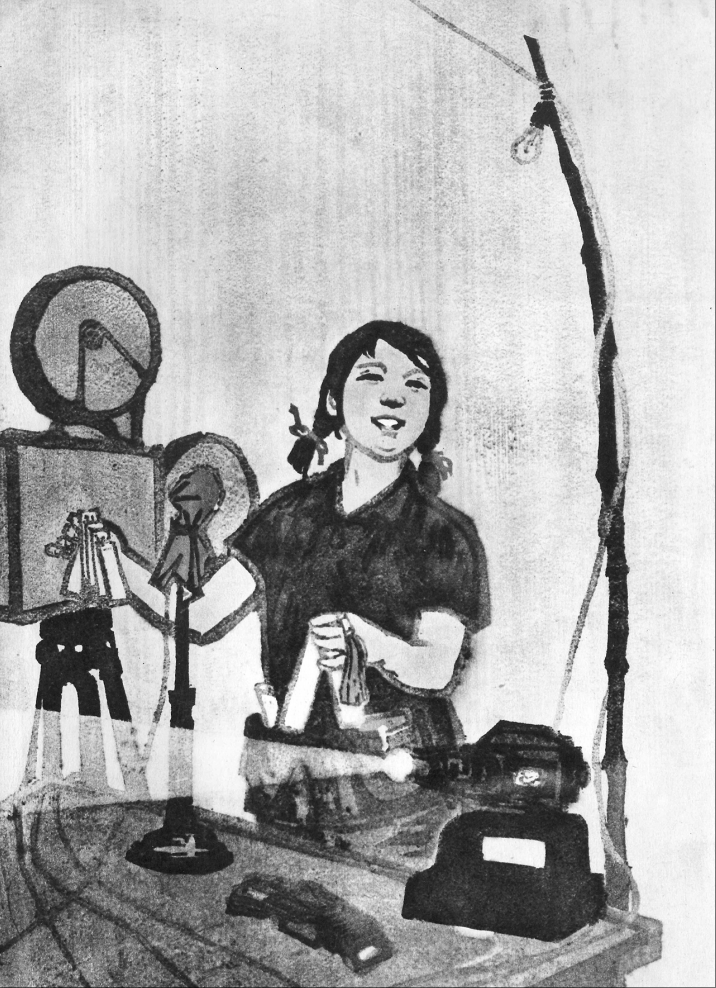
Figure 1: Woodcut image of a projectionist performing a clapper talk with a slideshow, by Wu Qingxun and You Jingu. First published in Mass Cinema, nos. 2 and 3 (1965).
In the 1950s, the main technical answer to rural film service was 16mm. The Nanjing Film Machinery Factory was assigned to produce 16mm projectors for villages and remote regions, while other factories focused on 35mm equipment for city theaters and military use. This arrangement worked for a time, but its limitations became more obvious as the rural network moved deeper into mountainous, border, and non-electrified areas. A full 16mm mobile setup was still heavy. Projector, power supply, reels, screen, and tripod together could exceed 80 kilograms. In difficult terrain, transport was exhausting and expensive. In one case, a projection team in Tibet reportedly needed four yaks just to carry its equipment. By the early 1960s, the question was no longer simply whether film should go to the countryside. The real question was how to make that service lighter, cheaper, and more mobile.
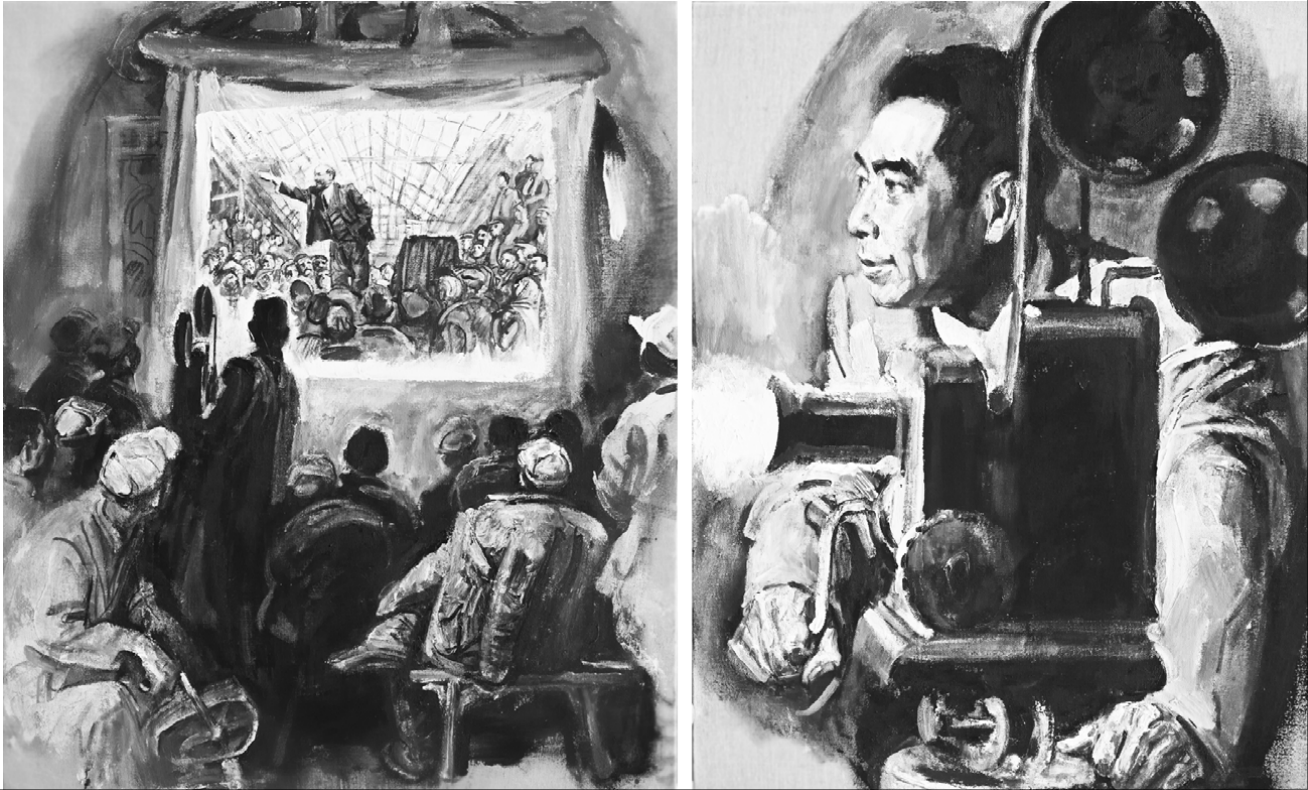
Figure 2: Zhou Enlai Shows Films. Illustrations by Shen Yaoyi, Lianhuan huabao, no. 2 (2012).
Why 8.75mm Was Chosen
That pressure directly shaped the emergence of 8.75mm. In 1965, Chinese film authorities pushed for lighter projection equipment. The Nanjing Film Machinery Factory developed a new lightweight 16mm projector, but the search did not stop there. Officials and engineers began discussing whether an even smaller-gauge system could better serve rural exhibition. At the national film technology conference held in November 1965, two options were debated: adopting Super 8, which already had the advantage of being an international standard, or developing 8.75mm as a separate domestic system. The debate was never only about technology. Supporters of Super 8 stressed standardization, technical convenience, and international exchange. Supporters of 8.75mm argued that China should work from domestic needs, follow a path of independence and self-reliance, and not feel obliged to match international standards. That position won.
There was also an earlier Western precedent, though it remained unrealized. Chinese technical writing notes that France had previously experimented with an 8.75mm gauge, but that system was not adopted internationally and was eventually abandoned. The gauge itself, then, was not entirely unimaginable in the West. What was specifically Chinese was the decision to revive and develop it into a full projection and distribution system, with its own technical standards, production lines, and equipment ecology. China did not simply borrow an international format. It turned an unrealized possibility into a state-supported rural exhibition format.
The reasons for choosing 8.75mm were both practical and technical. Compared with Super 8, 8.75mm offered a larger image area and a larger sound area. It could also be made directly from 35mm source materials through synchronized reduction printing and transfer at 24 frames per second. This mattered because 8.75mm was not conceived as a home-movie format centered on amateur camera use. It was designed mainly as a projection format for circulation. Its logic was industrial and distributive rather than domestic and personal. The format was small because the screening network needed portability, not because the state wanted to promote private filmmaking.
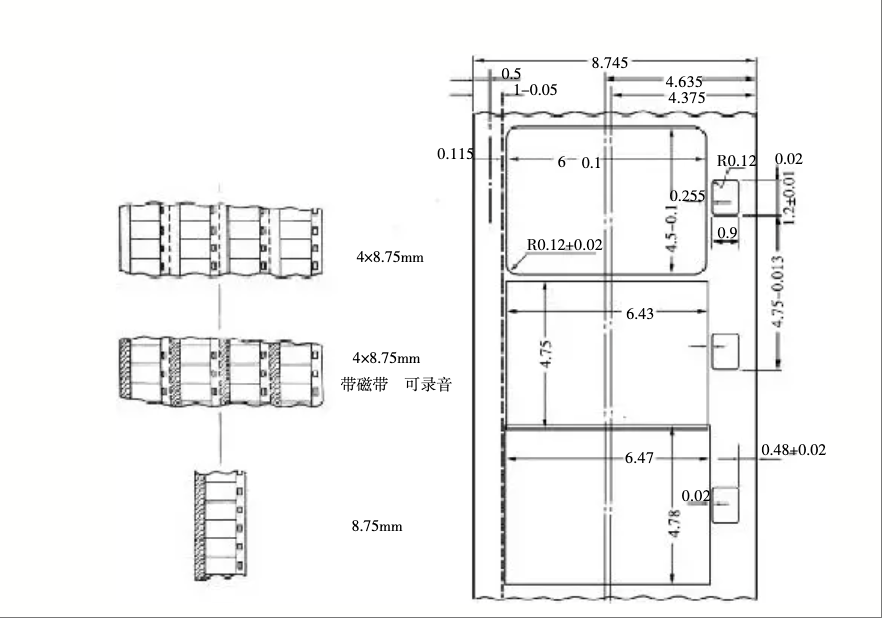
Figure 3: 8.75mm Structural Parameter Diagram
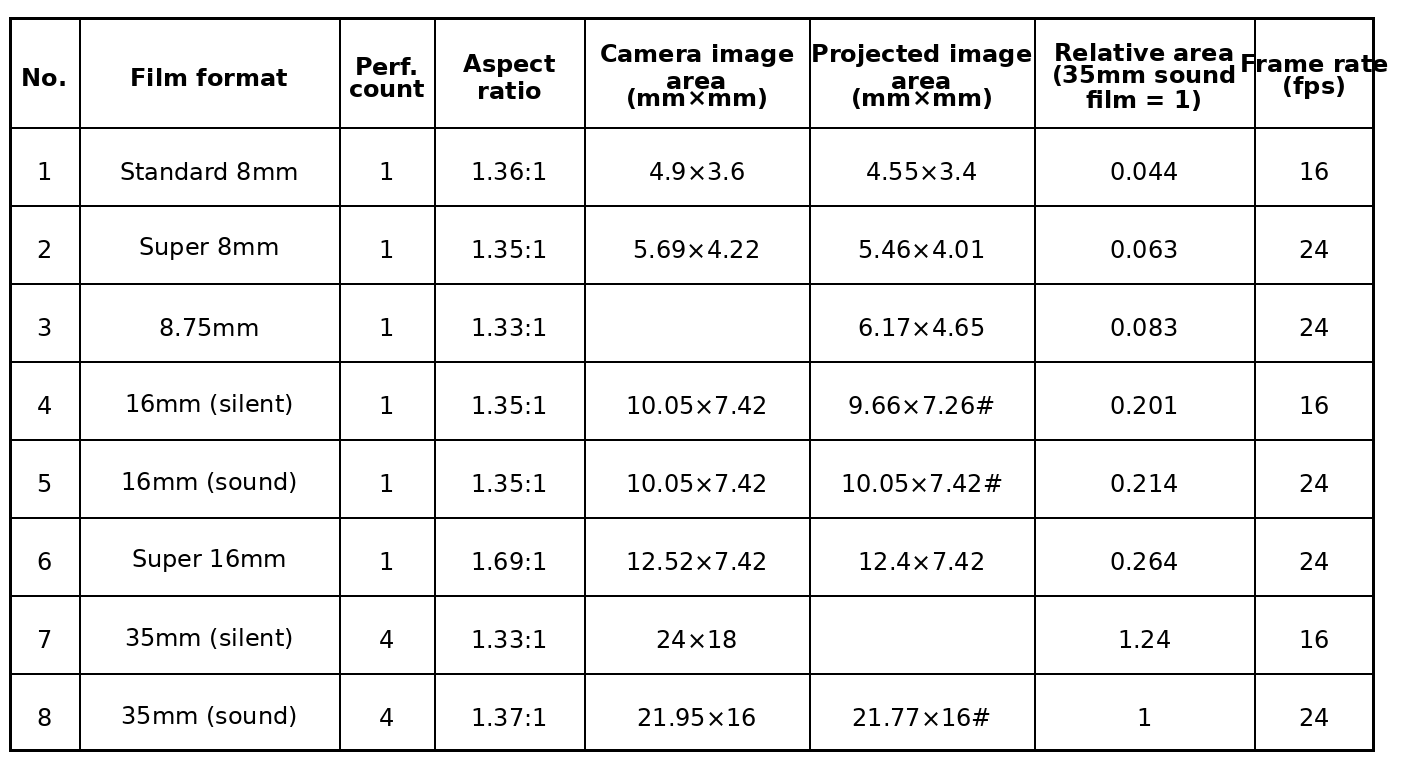
Figure 4: Comparison of different film formats.
Once the 8.75mm principle was settled, development moved quickly. A Support-the-Countryside Film Command was established in 1965 to coordinate projector manufacture and print production. From 1966 onward, film machinery factories in Beijing, Shanghai, Hunan, Anhui, Zhejiang, Shandong, Qinghai, Sichuan, Guangdong, and elsewhere began testing and producing 8.75mm projectors. By the early 1970s, the system was being standardized. In 1973, the FL-8.75 I projector became the nationally approved model, and several factories were designated for fixed-point production. At the same time, the supporting infrastructure for the format was built up, so that 8.75mm could function as a complete production-and-exhibition chain rather than as an isolated experiment.
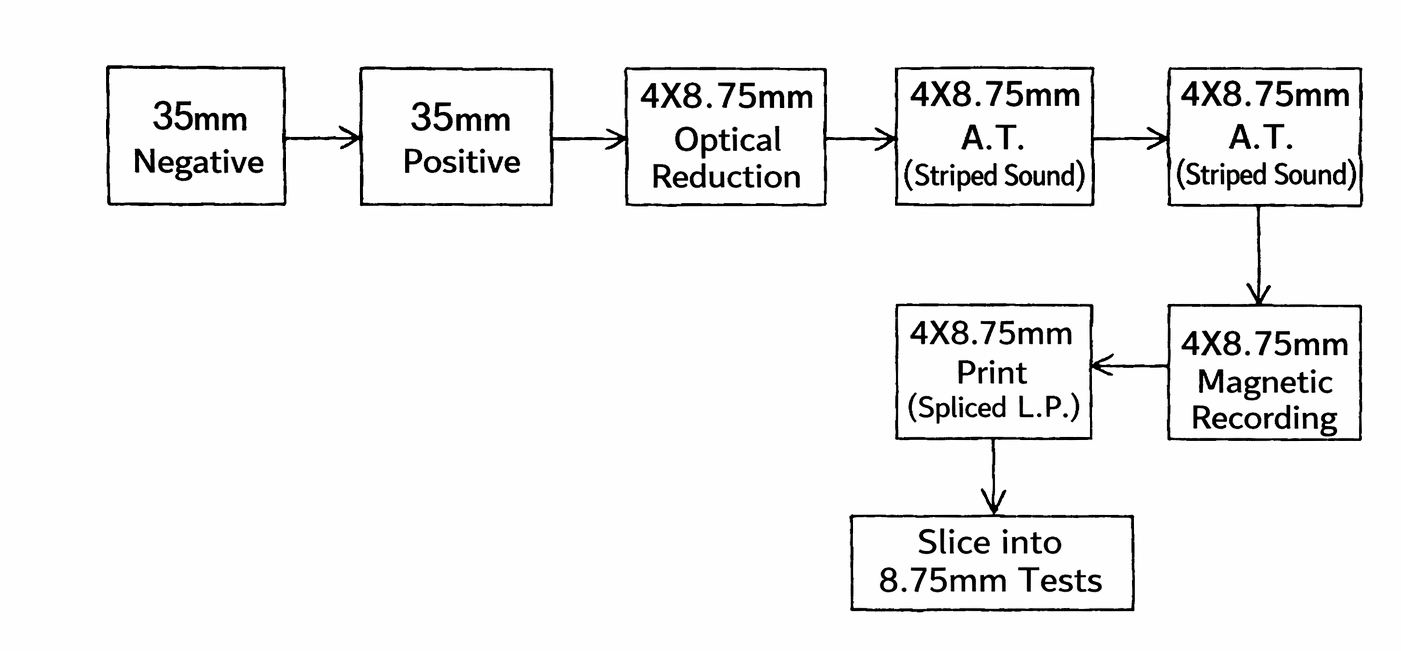
Figure 5: Diagram of the 8.75mm print production workflow.
A Specific Film Gauge for a Specific Period
Short Note: To help you familiarise yourselves with some Chinese terms so that you can better understand what follows, I would like to provide a brief explanation:
- Cultural Revolution: the Cultural Revolution (1966–1976), a decade-long political campaign that reshaped cultural production, everyday life, and systems of mass communication in China
- Commune-based Projection: a commune-based mobile projection system, organized through the people’s commune structure in rural China
- Household Responsibility System: the household responsibility system, which replaced collective farming with household-based production
As Jie Li writes, “The Chinese revolution was a media revolution” (Li 2023, 1). 8.75mm did not rise and disappear by accident. Its history was closely tied to a specific political period, a specific exhibition system, and a specific rural environment. It became important when China needed a lightweight format for commune-based mobile projection, and it declined when that institutional world began to change. In this sense, 8.75mm was not only a film gauge. It was a format built for a particular historical moment.
1966–1976: Commune-Based Projection and Propaganda
The Cultural Revolution did not cause the disappearance of 8.75mm. On the contrary, it formed the historical environment in which the format expanded most effectively. During this period, the rural exhibition was closely tied to the commune-based organization and propaganda work. Central policy pushed for the expansion of 8.75mm teams at the commune level, including in minority townships. As a result, commune-run screening teams expanded rapidly. By around the end of the Cultural Revolution, Jiangjin alone already had about one hundred such teams, while the national total approached sixty thousand. These figures show that 8.75mm was not marginal. It was woven into the large-scale expansion of rural mobile exhibition.

Figure 6: Propaganda image featuring Mao Zedong. Reproduced from National Taiwan University Library Reference Services Blog, “文化大革命50年” (2016).
Its significance lay not only in portability, but also in function. Lightweight 8.75mm projectors made it easier for movie teams to reach mountainous and previously difficult terrain. At the same time, rural cinema became more deeply integrated into grassroots propaganda work. Projectionists were not merely machine operators. They were expected to be projectionists, propagandists, and commune members at the same time. Their work included not only screening films, but also explaining content, collecting audience response, promoting local achievements, and using cinema as a tool to educate and mobilize the masses. Rural film in this period was therefore never just entertainment. It was also part of a broader program of political education, scientific instruction, and social organization.
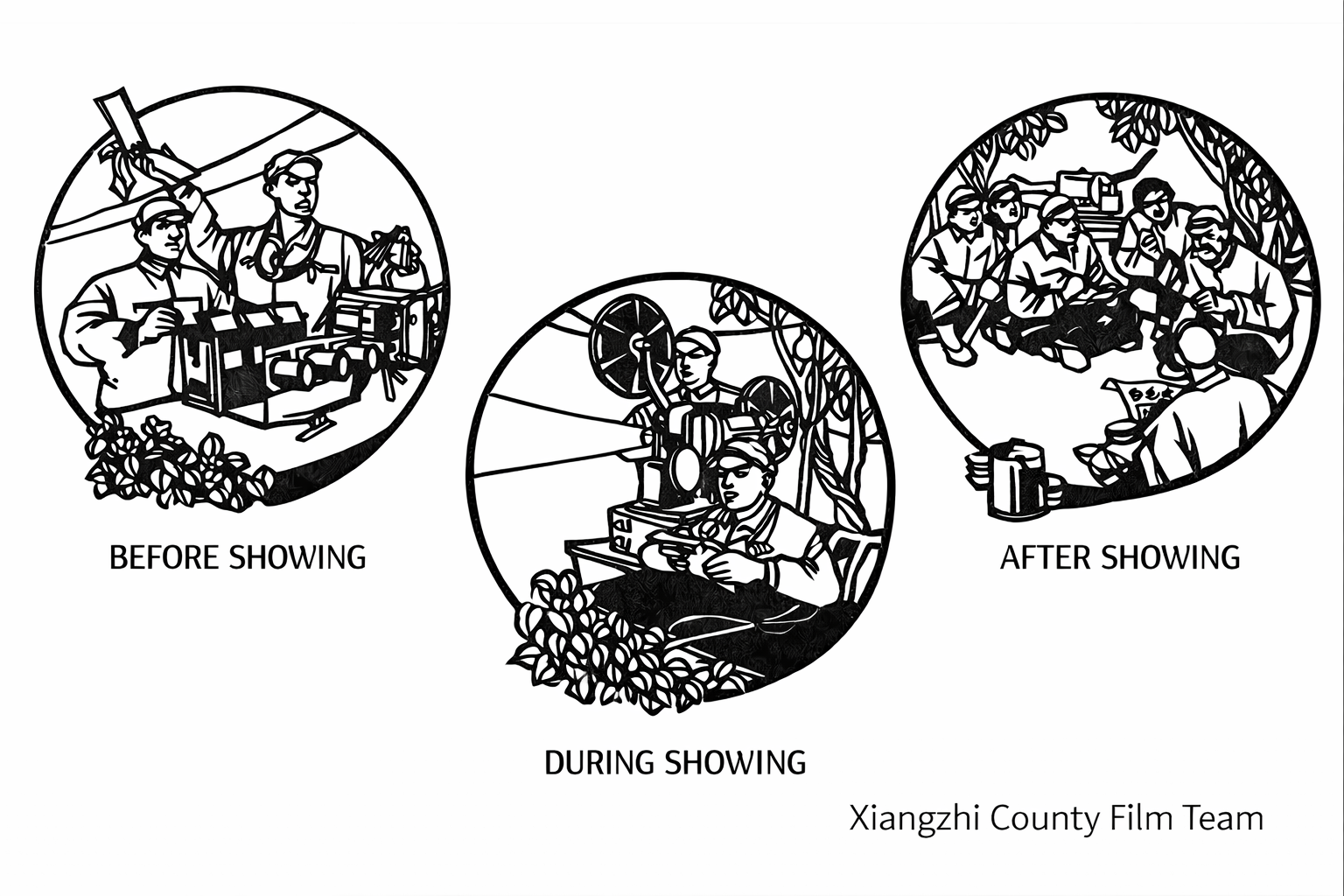
Figure 7: “Before, during, and after screenings.” Papercut by Shangzhi County Movie Station, Film Work Correspondence, no. 1 (1972).
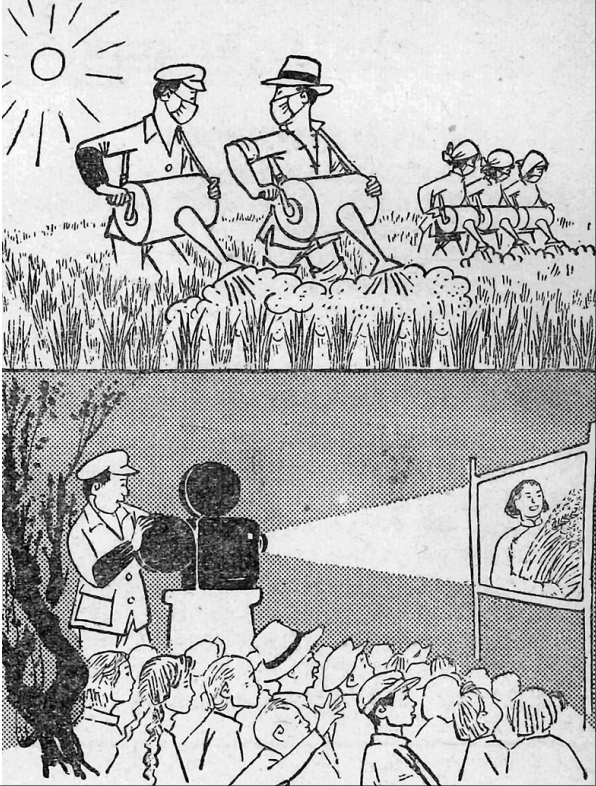
Figure 8: “Commune member by day, projectionist by night.” Drawing by Tao Yanling and Lu Zailiang, Mass Cinema, no. 10 (1964).
The content that circulated in 8.75mm reflected this role. Prints in this gauge carried newsreels, science and educational films, revolutionary opera, animation, and story films. The format itself did not create a separate body of works in the way a camera-based amateur gauge might have done. Instead, it served as a reduced and mobile carrier for works that the state wanted to send outward through rural screening networks. This is one reason 8.75mm matters historically: it reveals how film gauge, exhibition policy, and ideological reach could be designed together.
After 1978: Reform, Rural Restructuring, and Gradual Decline
The reforms that occurred after 1978 explain why 8.75mm fell out of use, much like the Cultural Revolution explains the growth before then. It wasn’t that a single incident caused the demise of the format; rather, it resulted from a change in the social environment in which it existed. Rural film screenings did not end immediately upon the initiation of the Reform and Opening-up policies; quite the contrary, they saw a revival at first. Nevertheless, the structural basis behind these communal projections began to fall apart. The adoption of the household responsibility system, the disintegration of the people’s communes, and the broader move towards economic liberalization contributed to a new social environment in which 8.75mm could no longer flourish.
At the same time, the ideal form of rural moviegoing began to change. In the reform era, officials increasingly imagined rural cinema not as standing outdoors to watch small-gauge films, but as a more modern and comfortable experience. In the early 1980s, film authorities promoted the three transitions: from contracted screenings to ticket sales, from standing to sitting, and from 8.75mm and 16mm small-gauge films to 35mm big-screen cinema. This policy language is important because it shows that 8.75mm was no longer treated as the future of rural cinema. It was being redefined as an earlier stage that should eventually be overcome.
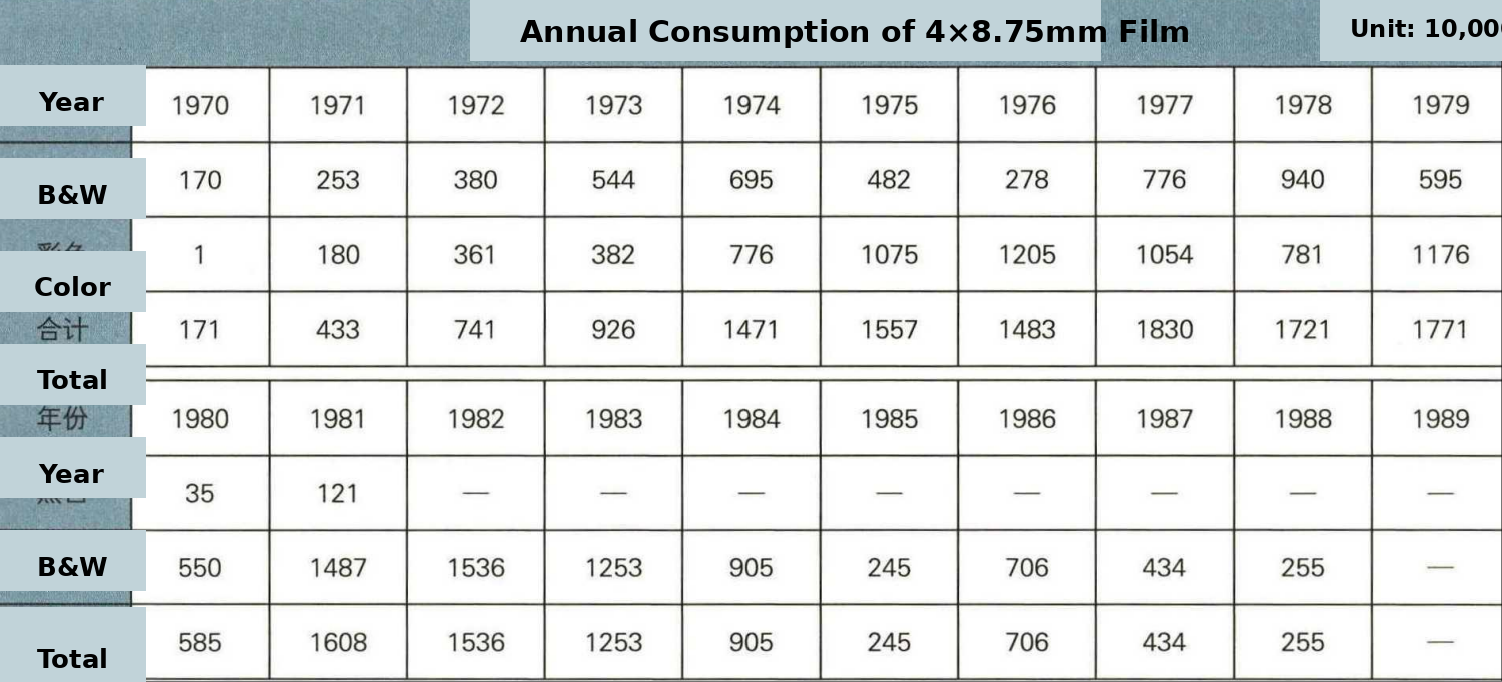
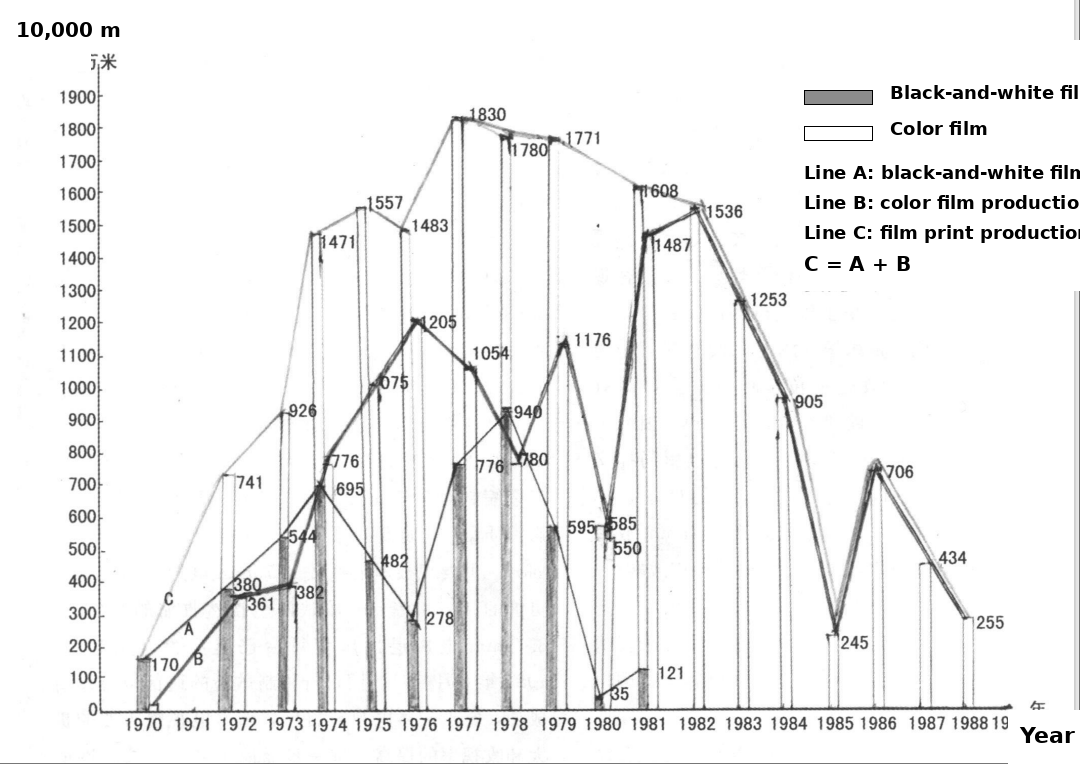
Figure 9: Annual Consumption of 8.75mm Film. Table reproduced from “A Retrospective on the Development of China’s Unique 8.75mm Film Format.
Economic change also mattered. As market reform deepened, rural projection units increasingly had to survive on their own. Greater autonomy also brought greater financial pressure. When screenings no longer guaranteed enough revenue, many projection workers stopped showing films and turned to other livelihoods. Some shifted into commerce altogether. Under these conditions, 8.75mm was losing not only technical ground, but also its labor base. The people who had once sustained the mobile exhibition network could no longer rely on it as a stable way of life.
Another decisive factor was media competition. By the late 1980s and especially the 1990s, television, videotapes, and later video parlors transformed rural entertainment. Rural film was no longer the only or even the main screen culture available to ordinary people. Studies of Chongqing and broader rural exhibition history both describe the sharp contraction of projection teams and the shrinking of the film market under the impact of television and video. Under these conditions, a format like 8.75mm lost much of the advantage it had once possessed. It had been designed for a mobile screening network, but that network was now being squeezed by both market reform and new media.
By the 1990s, 8.75mm had largely ceased to be central to rural exhibition. Yet its decline should not be understood as proof that it was historically minor. On the contrary, it had been so closely tied to a specific exhibition order that, once that order changed, the format also faded. 8.75mm disappeared because the world it had been built for was disappearing too.
Conclusion
As an aggregate concept, the 8.75mm is not merely the historical development of a particular film gauge, but the history of cinema’s readjustment to serve the needs of rural China. 8.75mm emerged from the need to create a nationwide film distribution system in a large country with limited infrastructure. It expanded greatly under Mao, particularly in the propaganda world of the communes during the Cultural Revolution. 8.75mm began to shrink in the era of reform as collectivism declined, market logic grew stronger, projectionists sought other sources of income, and television and video changed how people watched film structures.
References
[1] “8.75 mm Film Format.” Super 8 Database. August 2009.
[2] Chen, Shuzhou. Cinema off Screen: Moviegoing in Socialist China. Berkeley: University of California Press, 2021.
[3] Li, Jie. Cinematic Guerrillas: Propaganda, Projectionists, and Audiences in Socialist China. New York: Columbia University Press, 2023.
[4]Li, Jie. Utopian Ruins: A Memorial Museum of the Mao Era. Sinotheory. Durham, NC: Duke University Press, 2020.
[4] Li, Sixuan. “Small-Gauge Film Formats in China: Their History and Current Archival Conditions.” Master’s thesis, Moving Image Archiving and Preservation Program, New York University, 2024.
[5]Li, Nianlu, ed. Fundamentals of Film and Television Technology. Illustrated rev. 3rd ed. Beijing: Houlang Publishing, 2015.
[6] Lin, Shu-wen. “The Relationship Between Cultural Policy and Technology Obsolescence: Introducing the History of 8.75mm Film in China.” Moving Image Archiving and Preservation Program, New York University, 2014.
[7] Liu, Jianian, and Guo Yanan. “The Exploration of Film Projection Practices in Rural Chongqing from 1977–1999 and Further Reflections.” Chinese Film Market, December 2021, 49–59.
[8] Yu, Guigeng. “Looking Back at the Unique Phenomena of the History of Chinese Film—8.75mm Film.” Motion Picture & Video Technology (Xiandai Dianying Jishu), 2005.